
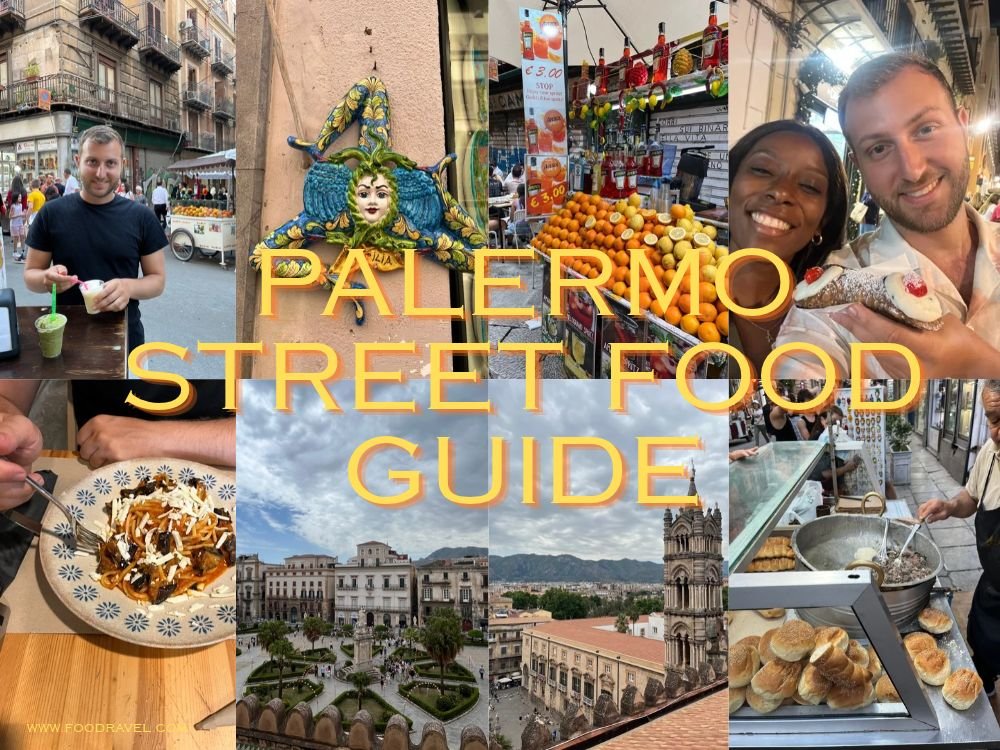
We spent a few sun-soaked days in Sicily in May 2024, based in Palermo, and we still talk about the food. Not one meal in particular, but the whole rhythm of it: eating standing up at a market counter in the morning, something fried and golden at lunch, a sweet and cold granita in the afternoon, and dinner whenever we got hungry again. Palermo is one of the great street-food cities of the world, and this Palermo Street Food Guide shows how we ate our way through it. If you are wondering what to eat in Palermo, you are in the right place.
Every Palermo Street Food Guide Starts With the Arancina
If you eat one thing in Palermo, make it an arancino. It is a crisp golden ball of saffron rice, stuffed with ragù or cheese, fried until the outside crackles. Order one and you will immediately order a second. We did, more than once.
The first one we had set the tone for the whole trip. We were wandering the old town, hungry in that way you get when you have been walking for hours, and there it was: warm, salty, filling, and cheap. It is the perfect walking food, and it tastes like Palermo itself, a little bit of everything the city has absorbed over the centuries, rolled into one very satisfying ball. Any serious Palermo street food guide has to start here.
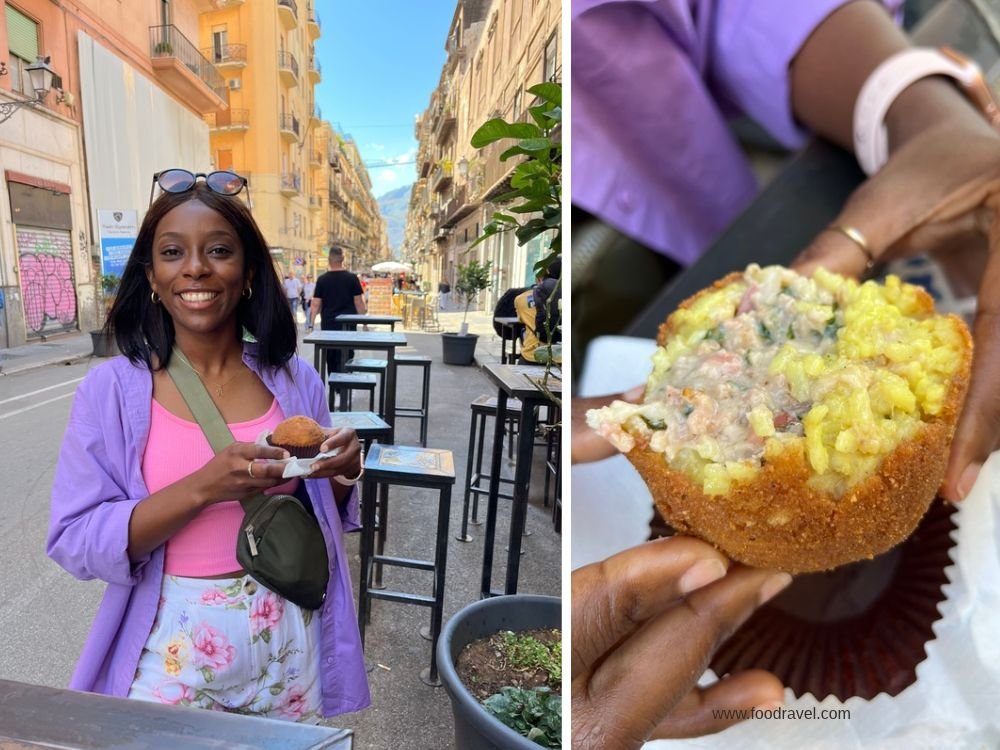
Melody still says the arancino is the thing she would fly back for. She is not wrong. It is simple, it is honest, and it is hard to get wrong when you buy it from a busy place that sells hundreds a day. If you are hunting for the best arancino in Palermo, our rule was easy: if there is a queue, join it. If the arancini are coming out fresh, order two. Arancini Palermo style are everywhere, but the busy counters are always the best.
The Markets Are the Kitchen: Palermo Food Markets
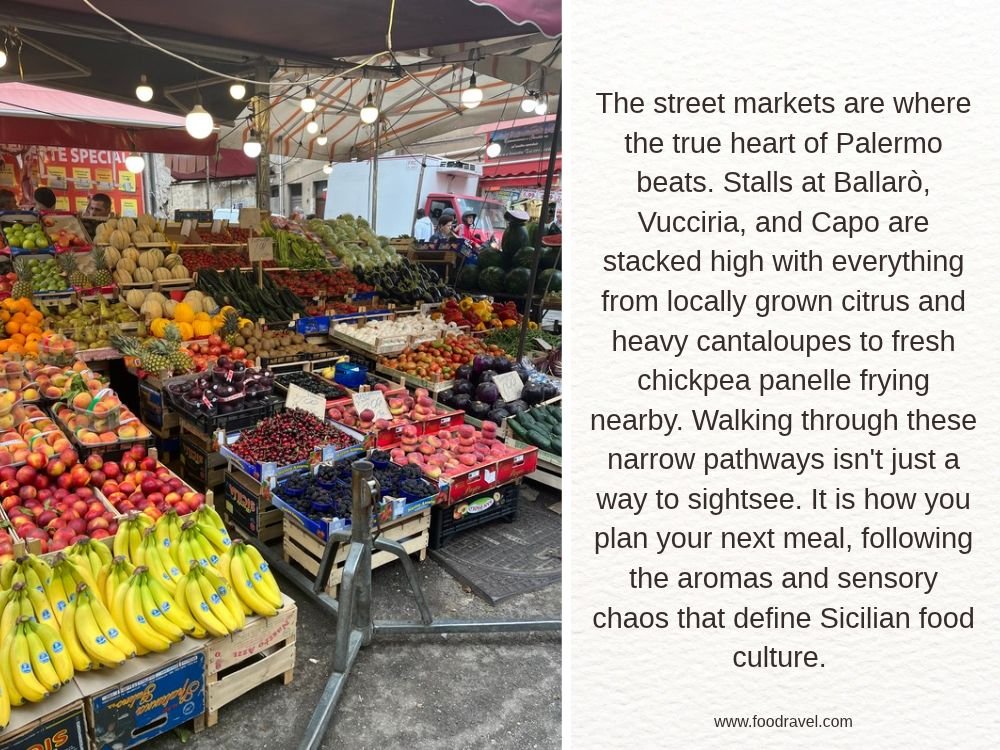
The Palermo food markets are where the city eats, and they come alive at mealtimes. Ballarò market, Vucciria market and Capo market Palermo are the big three, and each one is worth a wander with an empty stomach. The stalls are piled with vegetables, bread, olives and cheese, and between them are the counters where the real eating happens.
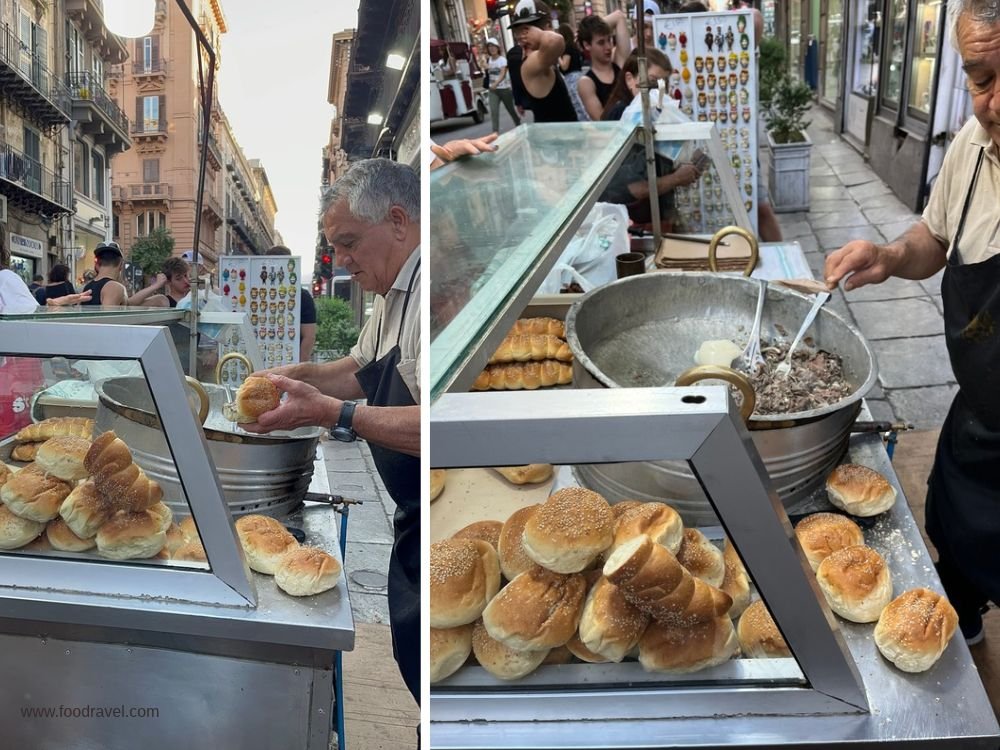
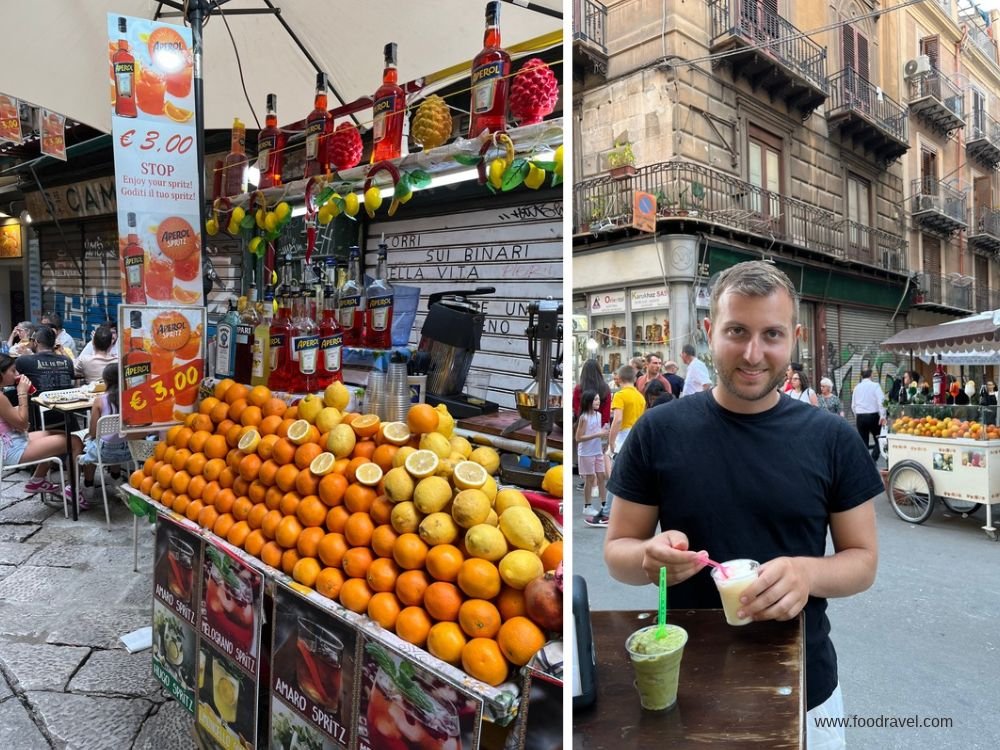
This is where we found the rest of the menu, and where we tasted the best street food in Palermo:
Panelle
Thin chickpea fritters served in a soft roll, salty and warm and gone in about four bites. Panelle Palermo style is a market-counter classic.
Sfincione
The thick, spongy Sicilian pizza topped with tomato, onion and cheese, sold by the slice and eaten standing up. Sfincione Palermo bakeries have been making it this way for generations.
Lemon foam juice
Frothy, tart and sweet from a market cart, so refreshing in the heat that we went back for it twice in one afternoon. Andrew still talks about that juice. It looks unusual, it tastes like summer, and it costs almost nothing.
Eating in the markets is not a tour or an event. It is just lunch, the way Palermo does it every day. You point, you pay, you eat, you move on. Nobody rushes you, but nobody makes a ceremony of it either. That is what we liked most. The food is part of the street, not separate from it. Every good Palermo street food guide will tell you the same thing: start at the markets. If you want a guided version, a Palermo street food tour is a good way to meet the stalls, but it is just as easy to go on your own.
Coffee, and How the Day Starts
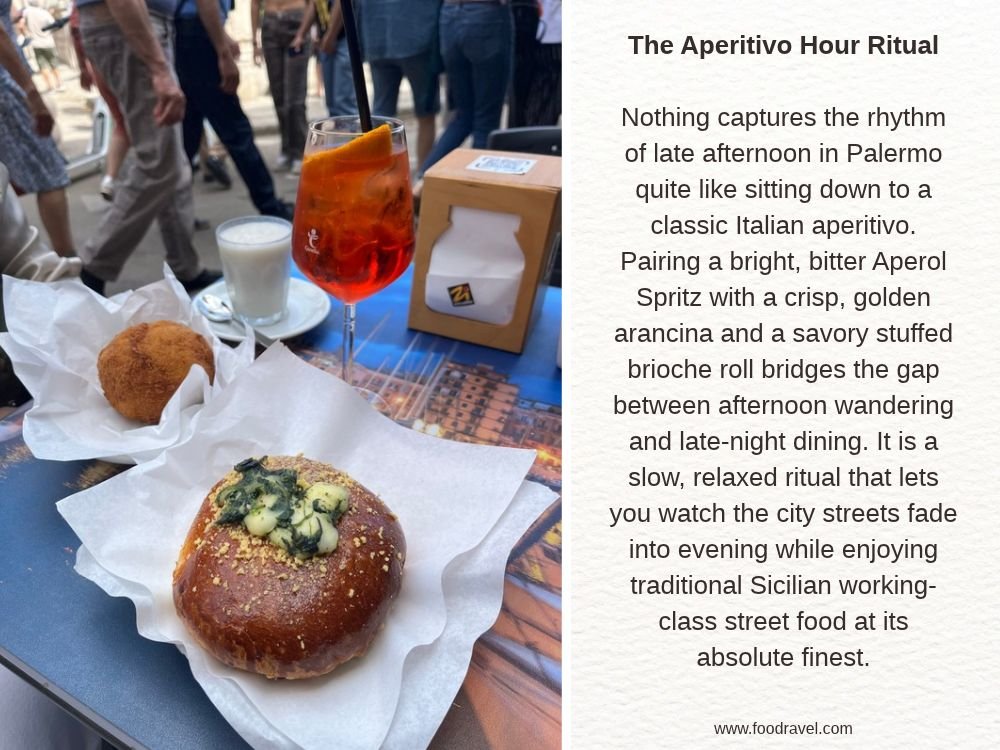
Sicilians take breakfast seriously, but not in the way you might expect. A typical morning is a coffee standing at the bar, quick and strong, sometimes with a warm brioche. It is not a long sit-down meal. It is a short ritual before the day starts, and we got into the habit fast. There is something pleasant about ordering the same thing as everyone else around you and being out the door in five minutes, ready to walk.
That rhythm suited us. Palermo is a city for walking, and walking is hungry work. By mid-morning we were ready for something from a market stall, by lunch we were ready for something fried, and by late afternoon we were ready for something sweet and cold. The city feeds you in stages, and if you follow its pace instead of fighting it, you eat very well without ever sitting down to a big formal meal.
It is worth saying, too, that nothing we ate in Palermo was expensive, which is the part we wish every Palermo street food guide led with. Sicilian street food is working food, priced for the people who eat it every day, not for visitors. That is part of why it is so good. A place that has to win the same customers back every morning cannot afford a bad arancino, and it is why traditional Sicilian food here is so reliably good.
A Sweet Ending: Sicilian Cannoli and Granita Sicily Style
No day in Palermo is complete without something sweet. Sicilian cannoli are the obvious choice: a crisp shell filled with sweet ricotta, sometimes with chocolate or pistachio on top. They are best eaten fresh, when the shell still crackles, so buy one from a place that fills them to order rather than one where they sit all day.
Then there is granita, the shaved-ice dessert. Granita Sicily style is a way of life, and granita for breakfast Sicily locals swear by is the shaved ice eaten as happily in the morning as for an afternoon break. At Mondello, after a morning of swimming, we sat on the seafront with granita and took in one of the prettiest views in Sicily. The bay curves between two green headlands, Monte Pellegrino and Monte Gallo, and the water shifts from pale jade in the shallows to deep blue further out. A granita, a sea view, and nowhere to be. That is a good afternoon.
Follow this Palermo street food guide to the letter or ignore it and eat whenever you are hungry, and Palermo rewards you either way. That is the beauty of it. You cannot really go wrong, and this Palermo food guide works either way.
Between Meals, the City: Things to Do in Palermo
Of course, we did more than eat. The best things to do in Palermo are often right outside the next food stop. Palermo’s old town is chaotic in the best way: grand cathedrals and Baroque squares, faded palazzos with laundry strung across the balconies, vintage Fiat 500s parked on every street. The Cattedrale di Palermo is the city’s showstopper, a mix of Norman arches, Arab detailing, a Catalan-Gothic porch and a big Baroque dome, all in warm honey-coloured stone. Go early for softer light and empty gardens, and pay the little extra to climb up to the rooftops for a view over the old town.
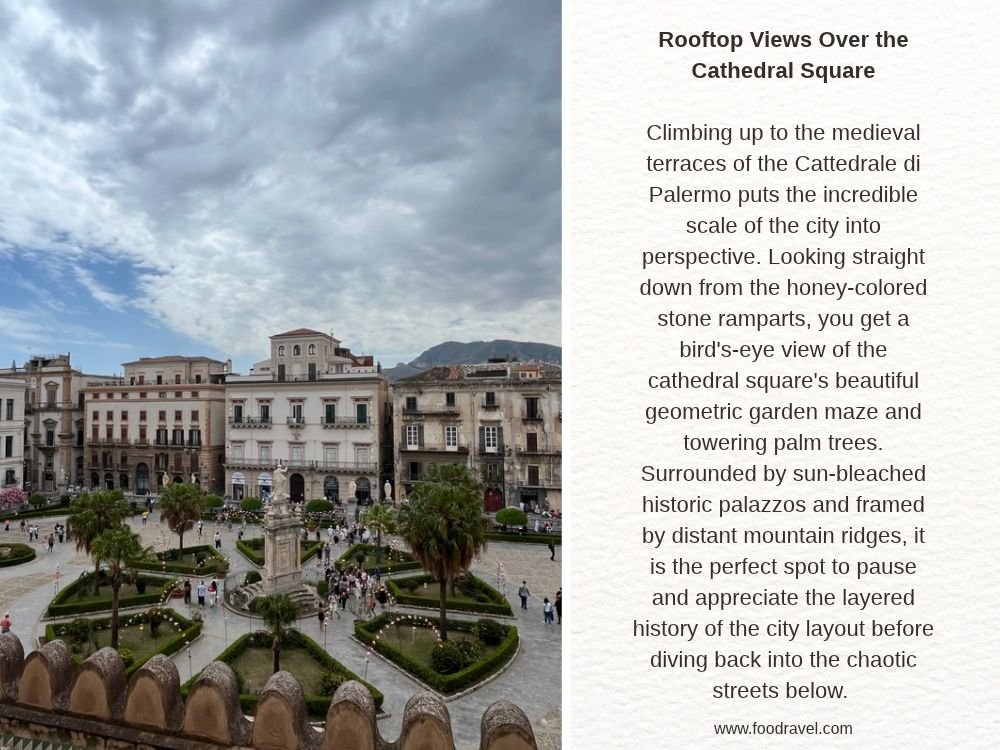
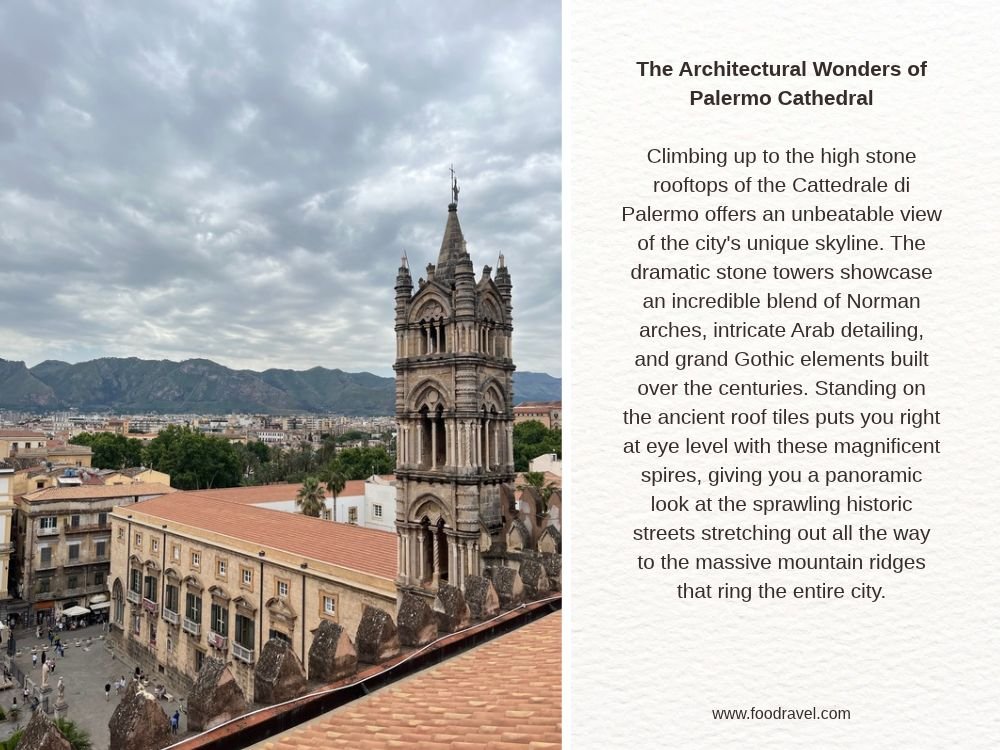
The heart of old Palermo is a joy to walk. Piazza Pretoria is wrapped around a wedding-cake marble fountain crowded with statues, and it is a two-minute stroll from the Quattro Canti, the beautiful Baroque crossroads where the four corners of the historic centre meet. North of the tangled old town, Palermo opens up into wide 19th-century boulevards and grand piazzas, and the neoclassical Teatro Politeama, with its Pompeian-red colonnade and bronze chariot on top, is a lovely spot to frame a photo between those enormous columns.
Honestly, some of our favourite moments were just wandering. The back streets are full of character, sun-bleached buildings, laundry flapping overhead, and gorgeous old Fiat 500s that look like they have been parked in the same spot for decades. Keep an eye out for the colourful hand-painted ceramics too: the three-legged Trinacria, Sicily’s ancient symbol, is everywhere and makes for the perfect souvenir.
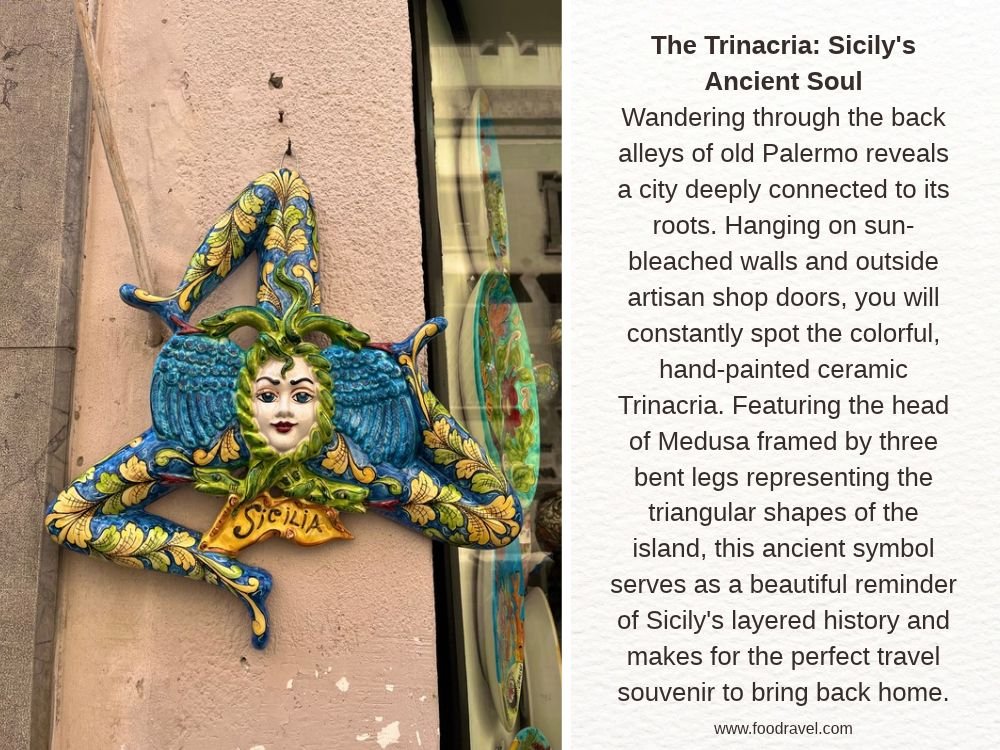
All of this walking is, conveniently, excellent preparation for the next meal. Palermo food and sightseeing go hand in hand, and on foot you are never far from something worth eating. Any good Palermo itinerary should leave plenty of room for both.
Mondello Beach Palermo: Time for the Sea
Just a short ride from the city centre, Mondello beach Palermo locals love is a wide crescent of pale sand and unbelievably clear turquoise water. After a few days pounding the city streets, this was the perfect way to cool off. The water is warm, shallow and so clear you can see straight to your feet, with soft pale sand and a proper holiday buzz. It gets busy in summer, so come earlier in the day for space, and it is an easy bus or taxi ride from the centre.
Read Here - Your Guide to the Most Stylish and Tasty Hangouts in South Delhi
Mondello has its own food rhythm, slower than the markets. A long lunch by the water, a granita on the seafront, and a walk along the bay as the light softens. For a different angle, a half-day boat trip along the coast is a gorgeous way to see it. We went for the swim and stayed for the afternoon, which is usually how Mondello goes.
What We Would Do Again
If we went back tomorrow, we would do almost exactly the same thing. The same markets, the same arancino hunt, the same lemon foam juice if we could find the cart again. The only thing we would change is giving ourselves one more day, because a few sun-soaked days felt short. Palermo is the kind of city where an extra day does not mean more sights. It means more wandering, more stopping, and more eating without a plan.
We would also spend another afternoon at Mondello, earlier in the day before the crowds, with a longer walk along the seafront. And we would buy a second Trinacria ceramic, because the first one gets more compliments than almost anything else we have brought home.
The honest truth is that Palermo surprised us. We knew it would be beautiful and we knew the history would be layered. We did not expect the food to be the thing we talked about most on the way home. For us, Sicily food travel starts and ends with the plate. It was, and it still is.
Palermo Street Food Guide: Start With the Arancina
Do not over-plan it. Palermo’s food is not about reservations or famous names. It is about walking, noticing, and stopping when something smells good. The city has been feeding people this way for centuries, and it is very good at it.
We left Palermo with sand in our shoes, photos of a Fiat 500, a ceramic Trinacria, and a firm opinion: Sicily is best understood one bite at a time. Start with the arancino. The rest will take care of itself, and this Palermo street food guide will get you started.
Palermo Street Food FAQ
Quick answers to the questions travellers ask most
The Food
What is the most famous street food in Palermo?
The arancina, a golden fried rice ball stuffed with ragù, peas or cheese. Panelle, sfincione and pani ca meusa follow closely.
What should I eat in Palermo?
Start with arancine, then panelle and crocchè, sfincione, and pani ca meusa if you are adventurous. Finish with a fresh cannolo or a granita.
What is the difference between arancina and arancino?
Palermo and western Sicily say arancina for the round version, shaped like an orange. Catania and eastern Sicily say arancino for the often cone-shaped version.
What is arancino made from?
Rice, usually saffron-flavoured in Palermo, filled with ragù and peas or cheese, then breaded and fried. The dish goes back to the Arab period, when rice and saffron arrived in Sicily.
What is pani ca meusa?
A soft bread roll filled with boiled spleen, traditionally eaten at the Vucciria and often served with panelle. The flavour is strong.
What are panelle and crocchè?
Panelle are thin chickpea fritters and crocchè are potato croquettes. They are served together in a soft roll with a squeeze of lemon, usually for about €2 to €3.
What is sfincione?
A thick, spongy Sicilian pizza topped with tomato, onion and cheese, sold by the slice at bakeries and by street vendors.
Is Palermo street food good for vegetarians?
Partly. Panelle, crocchè and cheese-filled arancine work well, but much of the street food is meat-based, so ask what is inside. Check sfincione too, as some versions include anchovies.
Breakfast and Sweets
What do Sicilians eat for breakfast?
Usually a quick coffee at the bar with a warm brioche. In summer, many have granita with brioche instead.
What is granita, and why is it eaten with brioche?
Granita is a semi-frozen mix of water, sugar and a flavour such as lemon, almond, pistachio or coffee. It is served with a soft brioche that you dip in or use to scoop it up. Until about a century ago it was eaten with plain bread.
How do you know if a Sicilian cannolo is fresh?
The shell still crackles. The best shops fill cannoli to order, so avoid any that are displayed pre-filled.
The Markets
What is the best market in Palermo for a first-time visitor?
Capo is the easiest start, lively but less overwhelming than Ballarò. Ballarò has more variety and intensity but can feel chaotic.
What is the difference between Ballarò, Vucciria and Capo?
Ballarò is the oldest and largest, with the most intense street food. Capo is known for fried snacks, fish and arancine. Vucciria is now mainly an evening aperitivo and nightlife scene.
What are the opening hours of Palermo's food markets?
Ballarò and Capo are generally open daily from morning until late afternoon, sometimes to about 7pm. Vucciria has no fixed hours and is closed on Sundays. Hours vary, so check locally.
What is the best time of day to visit the markets?
Mornings for Ballarò, around lunch for Capo, and evenings for Vucciria. Mornings are best for the freshest produce and the strongest atmosphere.
Is Vucciria worth visiting?
Yes, for its history and evening energy. It is no longer the best place to see daily market life, so go after dark, not at 11am.
Cost and Planning
How much does street food cost in Palermo?
Most items cost €1 to €3, and a snack usually runs €3 to €7. A full street food meal typically comes to €10 to €15.
Is it safe to eat street food in Palermo?
Generally yes, especially at busy stalls with high turnover. In crowded markets like Ballarò, pickpocketing is a bigger concern than the food.
Are Palermo street food tours worth it?
Generally yes if you want guidance and context. Tasting tours start around $50, but the markets are easy to do on your own.
Is Palermo safe for tourists and solo travelers?
Generally safe with normal city precautions, such as watching your belongings in crowds and at night.
How many days do you need in Palermo?
Two to three days covers the markets, the main sights and Mondello. We spent a few days and wished for one more.
Can you visit Palermo on a budget?
Yes. Street food, local buses at around €1.40 a ride and free sights keep costs low.
Why is Palermo called a street food capital?
Its market culture goes back to Arab souks, and its tradition of eating standing up, by hand, is still everyday life. Forbes also ranked it Europe's top street food destination in 2015.
Is Palermo better than Naples for street food?
It is debated. Palermo wins on variety, with arancine, panelle and pani ca meusa, and on market culture, while Naples is known for pizza.
How do locals eat street food in Palermo?
Standing up, with their hands, at market counters, asking vendors what is freshest. Joining the queue at a busy stall is the safest way to pick well.
