
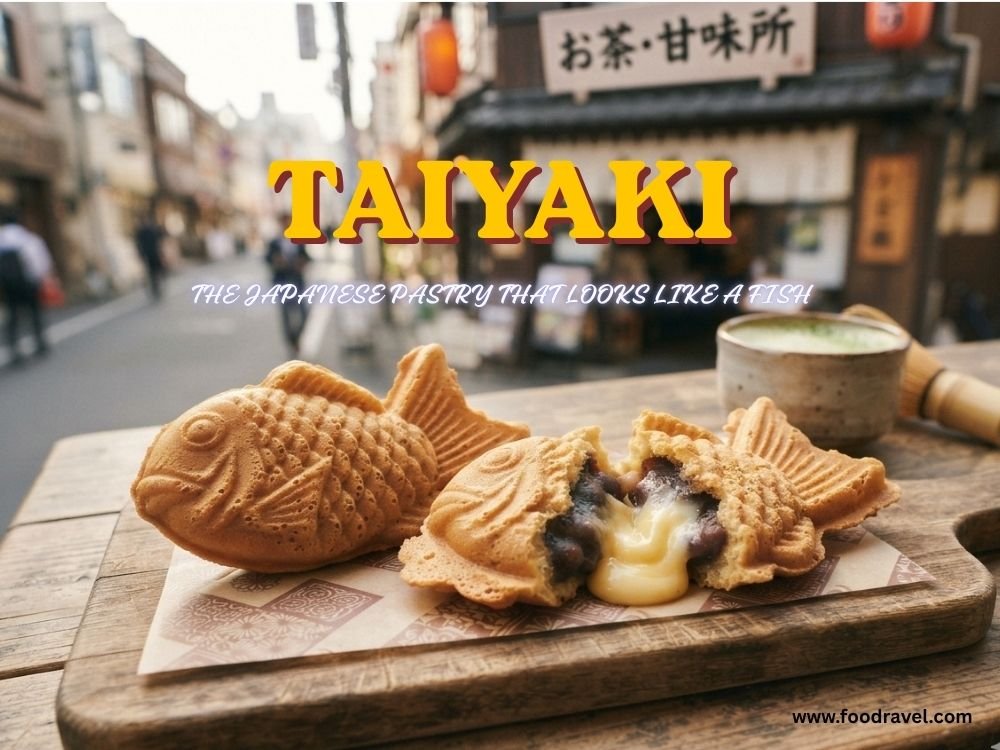
Walk past a bustling street stall in Tokyo and you might do a double take when you see someone biting straight into a golden, freshly grilled fish. At first glance, taiyaki street food looks like a whole sea bream pulled off the iron mold, with detailed scales and a curved tail. Then you take a bite. Instead of savory seafood, you get a warm, crisp waffle shell oozing with sweet red bean paste or melted chocolate. There is not a trace of actual fish inside.
(You can read our Palermo street food guide here.)
Over the last century, this Japanese snack has grown from a local Tokyo invention into a global café favorite, showing up in Asian night markets as well as specialty dessert spots in cities like Delhi and Mumbai. If you have ever wondered why taiyaki street food looks like a fish and what it actually tastes like, here is the full story behind Japan’s sweetest street snack.
What Is Taiyaki Street Food and Why Is It Shaped Like a Fish?
In Japanese, the word taiyaki combines tai (sea bream) and yaki (baked or grilled). Even though it contains zero seafood, the fish shape carries deep cultural meaning across Japan. Sea bream has long been considered a symbol of good fortune and celebration in Japanese culture.
The Japanese word for sea bream (tai) sounds very similar to medetai, which means auspicious or joyous. Because real sea bream was expensive and reserved for special occasions or wealthy households, ordinary people rarely got to eat it. In 1909, a Tokyo confectioner named Seijiro Kanbe decided to change that at his shop, Naniwaya Sohonten, in the Azabu-Juban neighborhood.
Earlier, he had tried baking pastries in turtle and rabbit shapes, which barely sold. When he switched to a cast-iron mold shaped like a sea bream and filled the sweet pancake batter with red bean paste, customers lined up immediately.
What Does Taiyaki Taste Like?
If you have never tried it before, you might wonder what does taiyaki taste like when you bite into it fresh off the griddle. The experience comes down to two contrasting textures that hit at the same time:
The Outside
The outer shell tastes very similar to a crispy Belgian waffle or a freshly made pancake. Because the batter cooks inside a closed metal mold, the thin edges around the fins and tail turn golden and crunchy, while the thicker belly stays soft and cakey.
The Inside
The batter itself is only mildly sweet and carries a subtle toasted wheat aroma. Because the shell is light, the filling does most of the flavor work. When eaten hot, the inside turns warm and gooey against the crisp shell.
Unlike heavily frosted Western pastries, traditional taiyaki street food offers a gentle, balanced sweetness that pairs naturally with unsweetened green tea or a cup of black coffee.
While sweet red bean paste remains the undisputed classic, modern taiyaki fillings have expanded to suit every kind of sweet tooth.
Traditional and Classic Fillings
Anko (Sweet Red Bean Paste)
Made from mashed azuki beans slow-cooked with sugar, anko is the original filling. It has a rich, earthy sweetness that reminds many first-time tasters of sweet chestnut or mild dark chocolate.
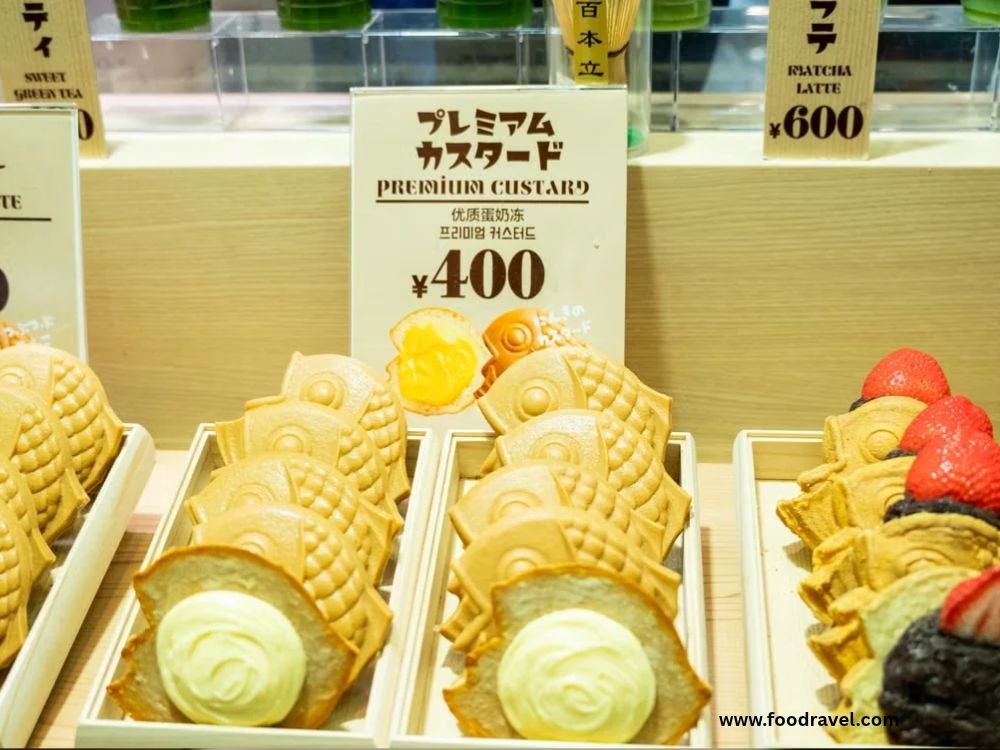
Vanilla Custard
A smooth, creamy pastry custard that tastes like warm vanilla pudding baked inside a crisp waffle shell.
Matcha Cream
Infused with Japanese green tea powder, this filling brings a slightly bitter, earthy note that cuts through the sweetness of the batter.
Modern and Café-Style Fillings
Chocolate and Nutella
Melted dark chocolate or hazelnut spread has become one of the most popular choices outside Japan, especially in Indian cafés.
Sweet Potato and Chestnut
Thick, nutty pastes made from roasted Japanese sweet potato (imo) or chestnuts (kuri), which appear as seasonal specials during autumn and winter.
Taiyaki Soft Serve
Many modern dessert shops bake wide-mouthed taiyaki cones and top them with swirled matcha or vanilla soft serve ice cream.
Classic Batter vs. Croissant Taiyaki
Classic Pancake-Batter Taiyaki
Made from a liquid wheat batter poured into the iron mold. It has a soft, cake-like interior with lightly crisp edges and tastes like a warm waffle.
Croissant Taiyaki
Made by pressing laminated, buttery puff pastry dough coated with coarse sugar inside the fish mold. The sugar caramelizes against the hot iron, creating a glossy, deeply crunchy, flaky crust that shatters when you bite into it.
Taiyaki Ingredients: Is Taiyaki Vegetarian and Eggless?
Because the snack is shaped like a fish, one of the first questions travelers and diners ask is whether is taiyaki vegetarian. The reassuring answer is that traditional sweet taiyaki never contains fish or meat. However, if you follow a strict eggless vegetarian diet (as many readers in India do), you should pay close attention to the taiyaki ingredients used in the batter:
Traditional Japanese Batter
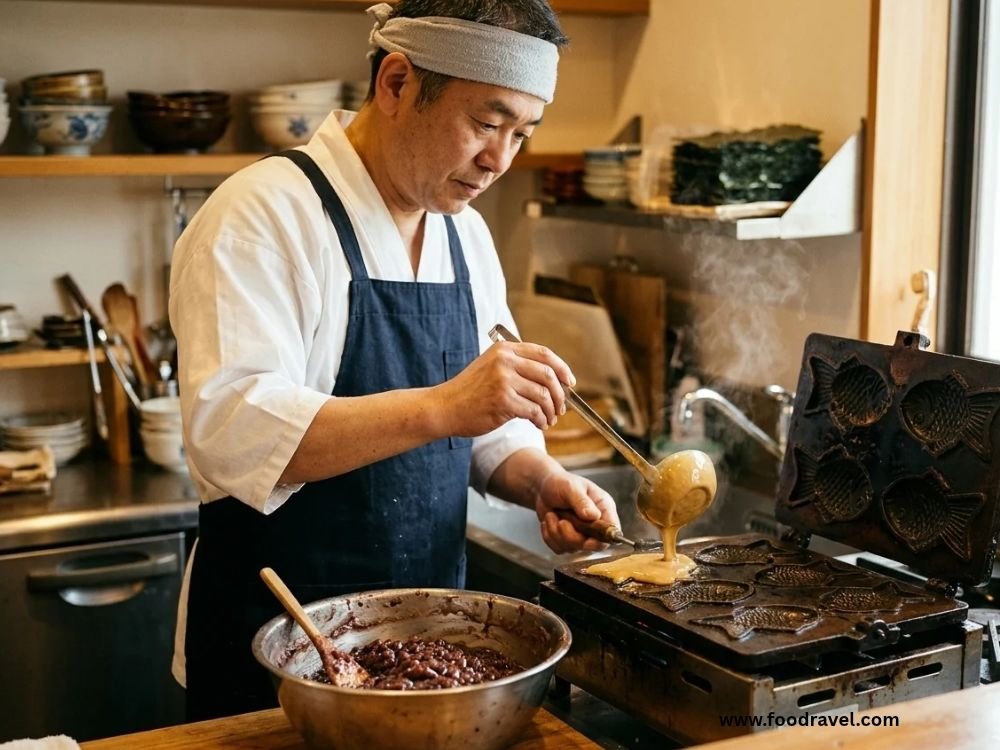
Authentic recipes in Japan usually mix wheat flour, sugar, baking powder, milk, and eggs. Similarly, traditional yellow pastry custard also uses egg yolks.
Eggless and Vegan Versions
Many modern cafés and vegan bakeries substitute eggs with plant-based milk, applesauce, or flaxseed meal. In India, several Japanese bakeries and dessert parlors explicitly prepare 100% eggless taiyaki waffles on their menus.
When ordering taiyaki street food at a café or festival stall, simply check whether the batter is eggless and stick to plant-based fillings like red bean paste, dark chocolate, or matcha.
How Taiyaki Is Made: Single-Mold vs. Multi-Mold Stalls
Watching vendors prepare taiyaki street food at a busy market stall is an experience in itself. Behind the counter, you will see heavy, hinged cast-iron molds deeply etched with scales, gills, and curved fins on both inner plates. Getting the balance between a crisp outer shell and a molten center requires precise timing and heat control:
01 · Seasoning and Preheating the Mold
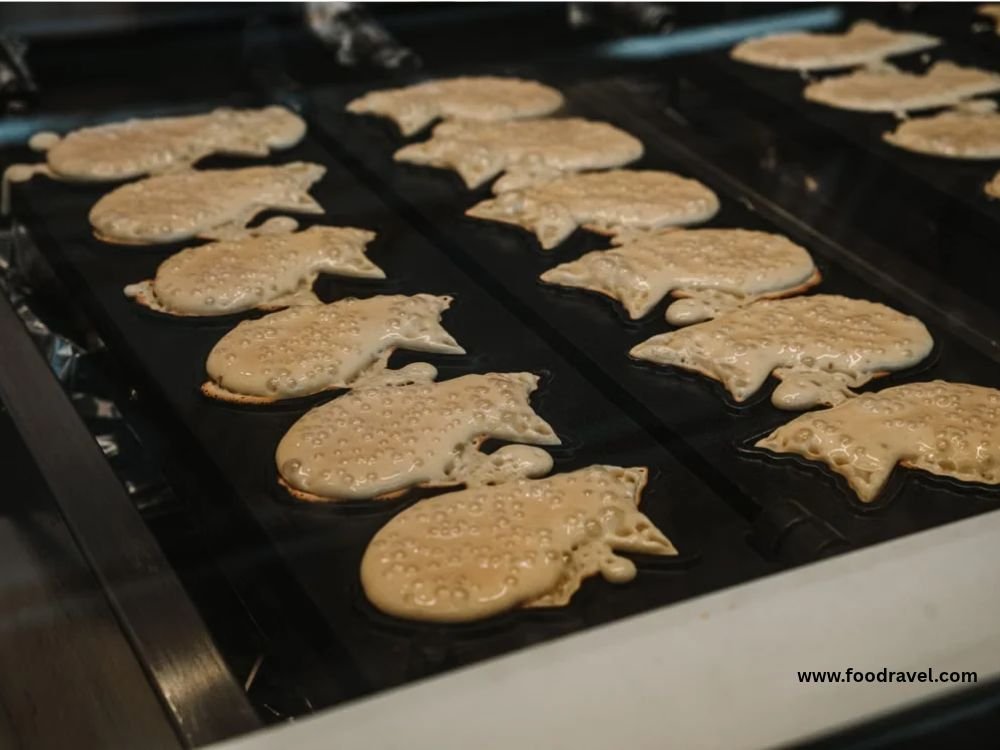
Before pouring any batter, the vendor heats the cast-iron plates over a gas burner or open flame and brushes every groove with a thin coat of vegetable oil so the intricate fish scales release cleanly without tearing.
02 · Pouring the Base Layer
The vendor ladles a thin stream of resting batter into the bottom half of the mold, tilting the pan slightly so the liquid reaches the narrow tip of the tail and the edges of the fins.
03 · Adding the Filling
While the base layer bubbles and begins to set around the edges, a generous spoonful of sweet red bean paste or custard is placed squarely in the belly of the fish, leaving a narrow border so the filling does not leak out during baking.
04 · Sealing and Flipping
A second, lighter pour of batter covers the filling. The vendor snaps the heavy iron lid shut, locks the handles, and immediately flips the mold upside down. Flipping ensures the top layer bakes evenly and picks up the exact same crisp texture and scale pattern as the bottom.
05 · Trimming the Edges
After two to three minutes of flipping over high heat, the mold opens to reveal a golden-brown fish framed by thin, lacy crisps of excess batter. Some vendors trim these delicate edges off with scissors for a neat finish, while others leave them on as an extra-crunchy bonus known in Japan as hane (wings).
In Japan, serious taiyaki fans actually categorize street stalls into two distinct baking traditions based on the equipment used:
Tennen (Natural) Taiyaki
Each fish is baked individually using heavy, long-handled single-mold irons (iccho-yaki) maneuvered by hand over a direct open flame. Because each mold weighs roughly two kilograms, baking tennen taiyaki is physically demanding and slower, producing limited batches. However, the direct flame heat creates a remarkably thin, blistered crust with a subtle smoky aroma while keeping the filling piping hot all the way to the tail.
One fish · One mold · Open flameYoshoku (Farmed) Taiyaki
Developed to keep up with crowds at busy train stations and festivals, this method uses large, commercial hinged griddles that bake six to ten fish at a time. The even, indirect heat produces a slightly thicker, softer, and fluffier cake-like shell that holds up well when carried away in a paper sleeve.
Multiple fish · Commercial griddle · Faster batches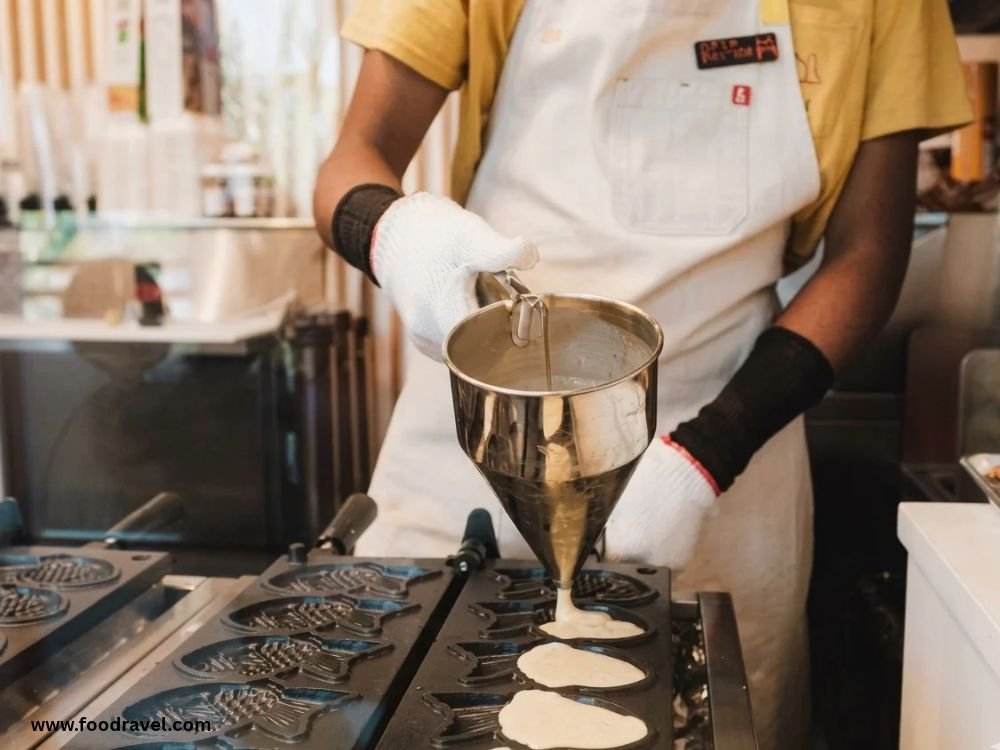
Taiyaki vs. Other Popular Japanese Street Sweets
If you are browsing a Japanese festival stall or a dessert menu for the first time, it is easy to confuse taiyaki street food with a few other classic Japanese sweets that use nearly identical ingredients. All three rely on sweet wheat batter and red bean paste, yet each delivers a completely different eating experience depending on how it is shaped and cooked:
Taiyaki vs. Other Popular Japanese Street Sweets
A closer look at three Japanese favouritesTaiyaki vs. Dorayaki
While both feature sweet anko red bean paste wrapped in golden batter, dorayaki is made by sandwiching the filling between two flat, fluffy round pancakes cooked on an open griddle. Dorayaki is typically eaten cold or at room temperature as a soft, sponge-like snack, whereas taiyaki is sealed inside a closed iron fish mold so its edges turn crisp and lacy while the center stays steaming hot.
Taiyaki vs. Imagawayaki (Oban-yaki)
Imagawayaki is actually the direct ancestor of taiyaki. It uses the same poured-batter technique inside a closed metal mold, but it is baked into a thick, round hockey-puck shape rather than a fish. Because the batter wall is thicker and lacks narrow fins or a tail, imagawayaki stays uniformly soft and cake-like from edge to center instead of offering the crunchy texture contrast you get with taiyaki.
Taiyaki vs. Ningyo-yaki
Popular near Tokyo's Asakusa temple district, ningyo-yaki are bite-sized sponge cakes baked in detailed molds shaped like dolls, lanterns, or pagodas. They have a lighter, sweeter castella texture compared to the hearty waffle-like bite of taiyaki street food.
Taiyaki vs. Other Japanese Street Sweets
Shape, preparation & texture| Feature | Taiyaki | Dorayaki | Imagawayaki | Ningyo-yaki |
|---|---|---|---|---|
| Shape & Size | Hand-sized sea bream fish | Flat round pancake sandwich | Thick round disc or cylinder | Bite-sized dolls or lanterns |
| Cooking Method | Closed hinged fish iron | Open flat griddle | Closed round well pan | Small patterned cast mold |
| Texture | Crisp, lacy edges with a soft belly | Soft, airy, and sponge-like | Thick, uniform, and cake-like | Light and tender like castella cake |
| Classic Filling | Sweet red bean paste (anko) or custard | Sweet red bean paste (anko) | Red bean paste or sweet custard | Smooth red bean paste or plain |
| Serving Temperature | Piping hot off the grill | Room temperature | Warm or room temperature | Warm or room temperature |
Where to Try Taiyaki in Delhi NCR and Japan
LANY Taiyaki and Soft Serve
GurugramLocated on the third floor of Ambience Mall, adjacent to PVR Cinemas, LANY Taiyaki and Soft Serve is a dessert counter built around Japanese-style taiyaki. Its menu features fish-shaped taiyaki soft-serve cones and mini taiyaki served with soft serve and dipping sauce. The brand places taiyaki at the centre of its dessert menu, offering a different take on the traditional Japanese street snack.
Friday–Sunday: 11 AM–11:30 PM
Harajuku Bakehouse
Delhi NCR · Multiple outletsHarajuku Bakehouse serves Japanese-inspired desserts and baked goods, including eggless taiyaki. Listed as a crispy, golden fish-shaped waffle filled with vanilla custard, its taiyaki is priced at approximately ₹175 on the delivery menus checked. The item appears on listings for several of the brand's Delhi NCR outlets, making Harajuku one of the more accessible places to look for taiyaki in the region.
- Defence Colony
Building 43, Defence Colony Market, New Delhi - Select Citywalk, Saket
First Floor, Select Citywalk Mall, New Delhi - Sector 31, Gurugram
SCO 11–12, HUDA Market, Gurugram - Sector 65, Gurugram
M3M 65th Avenue, Gurugram
Menu availability and prices can change by outlet.
Okumanya
AkasakaOkumanya is a Japanese sweets café in Akasaka specialising in taiyaki and traditional-inspired desserts. Its menu includes freshly baked taiyaki alongside parfaits, cheesecake, coffee jelly and matcha lattes. The taiyaki comes in different flavours, including combinations that bring together sweet red bean paste and Japanese cream cheese. With both dine-in seating and takeaway, it is a good option for enjoying taiyaki with a drink rather than grabbing one as a quick street snack.
Sunday: 12 PM–7 PM
Monday: Closed
Naniwaya Cafe
Azabu-JubanLocated on the second floor of the historic Naniwaya Sohonten, Naniwaya Cafe offers a sit-down setting for enjoying the shop's famous freshly made taiyaki. Founded in 1909, the confectionery is known for its traditional one-at-a-time cooking method, producing fish-shaped cakes with a thin, crisp shell and a generous filling of sweet azuki bean paste. The upstairs café also serves Japanese comfort dishes and traditional sweets, including yakisoba and shiruko, a warm red bean soup. It is a particularly good stop for experiencing one of Tokyo's best-known taiyaki traditions without having to eat on the street.
Asakusa Taiyaki Kobo Guraku
Nishi-AsakusaAsakusa Taiyaki Kobo Guraku combines a small Japanese-style café with a hands-on taiyaki-making experience. Its menu goes beyond the traditional red bean filling, with options such as custard cream, red bean butter, chocolate and savoury fillings. The shop uses an original flour blend without eggs or milk, and its taiyaki is available for takeaway as well as café dining. Visitors can also book a workshop to prepare and cook their own fish-shaped cakes, making this a more interactive stop for taiyaki lovers in the Asakusa area.
About 4 minutes on foot from Tawaramachi Station
Frequently Asked Questions About Taiyaki Street Food
From Japanese origins and traditional fillings to ingredients, flavours and food culture.
01 What Is Taiyaki and What Does It Taste Like? +
Taiyaki is a traditional Japanese fish-shaped pastry made from wheat-based batter and cooked in a special mould. It has a lightly crisp, golden exterior and a soft interior, with sweet red bean paste being the classic filling. Its taste resembles a combination of a waffle and a pancake, with the filling adding sweetness and flavour.
02 What Is Taiyaki Made Of? +
Traditional taiyaki batter is made using wheat flour, eggs, sugar, baking powder and milk or water. The batter is poured into a fish-shaped iron mould, filled with sweet red bean paste and cooked until golden. Recipes vary between shops, with some using different proportions or alternative ingredients to achieve a crispier or softer texture.
03 What Is Inside Traditional Japanese Taiyaki? +
Traditional Japanese taiyaki contains anko, a sweet paste made from azuki red beans. The paste has a mildly sweet, earthy flavour that complements the lightly crisp pastry. Some shops offer two types of red bean filling, chunky tsubuan and smooth koshian.
04 Is Taiyaki Sweet or Savoury? +
Taiyaki is traditionally a sweet Japanese snack, usually filled with sweet red bean paste. Modern variations include custard, chocolate, matcha and sweet potato, along with savoury options such as cheese and curry. The flavour depends on the filling chosen and the recipe used by the shop.
05 What Are the Most Popular Taiyaki Flavours? +
The most popular taiyaki flavours include traditional sweet red bean paste, custard cream and chocolate. Other variations include matcha, sweet potato, cheese and chocolate hazelnut spread. Traditional Japanese shops often focus on red bean fillings, while contemporary cafés and dessert shops experiment with seasonal and fusion flavours.
06 Is Taiyaki Japanese or Korean? +
Taiyaki is Japanese, originating in Tokyo in the early 20th century. Korea has a similar fish-shaped street food called bungeoppang, which became popular in Korean street-food culture. Both snacks are made using batter and fish-shaped moulds, but they have distinct cultural histories and local variations.
07 Where Did Taiyaki Originate and When Was It Invented? +
Taiyaki originated in Tokyo, Japan, around 1909. Naniwaya Sohonten, a historic sweet shop in the Azabu-Juban neighbourhood, is widely credited with introducing the fish-shaped pastry. The shop continues to serve traditional taiyaki, making it a notable destination for people interested in the snack's history.
08 Why Is Taiyaki Shaped Like a Fish? +
Taiyaki is shaped like a sea bream, known as tai in Japanese. Sea bream is associated with good fortune, celebrations and prosperity in Japanese culture. The fish is also connected to the word medetai, which expresses happiness or auspicious occasions. The shape gives the everyday snack a cultural association with good luck.
09 What Does Taiyaki Mean in Japanese? +
Taiyaki (たい焼き) combines two Japanese words. Tai means sea bream, while yaki means grilled or baked. Together, the word describes a baked or grilled sea-bream-shaped snack. The name refers to its appearance rather than an ingredient.
10 Does Taiyaki Actually Contain Fish? +
No, traditional taiyaki does not contain fish. Its fish shape represents the Japanese sea bream, while the pastry is made from flour-based batter and traditionally filled with sweet red bean paste. The name and appearance can be misleading, but fish is not part of the classic recipe.
11 Is Taiyaki Vegetarian or Vegan? +
Traditional red bean taiyaki is generally suitable for vegetarians, but its batter commonly contains eggs and milk. This means conventional taiyaki is not necessarily vegan. Eggless and fully vegan versions are available at some speciality shops, using plant-based milk and egg-free batter. Always check the ingredients and preparation method before ordering.
12 Does Taiyaki Contain Eggs or Dairy? +
Most traditional taiyaki recipes contain eggs and milk, although some shops use water or alternative ingredients in their batter. Custard and cream fillings also commonly contain dairy and eggs. Eggless and dairy-free versions exist, but their availability depends on the shop. Check the ingredient information if you have an allergy or dietary restriction.
13 Is Taiyaki Gluten-Free? +
Traditional taiyaki is not gluten-free because its batter is generally made with wheat flour. Some speciality shops and alternative recipes use rice flour or gluten-free flour blends. However, people with coeliac disease should also confirm that the preparation equipment and cooking surfaces are free from cross-contamination.
14 How Many Calories Are in One Taiyaki? +
One regular-sized taiyaki generally contains around 200–250 calories, although the actual amount depends on its size, batter and filling. Traditional red bean taiyaki may have a different calorie count from custard or chocolate versions. Larger portions and richer fillings can increase the overall calorie content.
15 How Is Taiyaki Different From Korean Bungeoppang? +
Taiyaki and bungeoppang are fish-shaped pastries from Japan and Korea, respectively. Taiyaki traditionally represents a sea bream, while bungeoppang is associated with the carp. Both commonly contain sweet red bean paste, but their batter recipes, shapes, textures and fillings can differ. Taiyaki is generally associated with Japanese street-food culture, while bungeoppang is a popular Korean winter street snack.
16 What Is the Difference Between Taiyaki and Imagawayaki? +
Taiyaki and imagawayaki are Japanese filled pastries traditionally made with batter and sweet red bean paste. The main difference is their shape. Taiyaki is cooked in a fish-shaped mould, while imagawayaki is round and thicker. Both are popular Japanese sweets, but taiyaki is more closely associated with street stalls and festival food.
17 How Is Traditional Taiyaki Prepared? +
Traditional taiyaki is prepared using a fish-shaped metal mould heated over a flame or cooking surface. Batter is poured into the mould, followed by a portion of sweet red bean paste and another layer of batter. The mould is closed and cooked on both sides until the pastry becomes golden and crisp. Some traditional shops prepare each piece individually using handheld iron moulds.
18 How Do Japanese People Eat Taiyaki, Head First or Tail First? +
There is no traditional rule about which end to eat first. Some people begin with the head, while others prefer the tail. The choice is a matter of personal preference and has become a lighthearted food debate in Japan. The most important part is enjoying the pastry while it is freshly prepared.
19 Is Taiyaki Best Eaten Hot or Cold? +
Taiyaki is traditionally best enjoyed warm and freshly cooked. The exterior is usually crisp, while the filling remains soft and warm. However, it can also be eaten at room temperature or chilled. Modern dessert shops sometimes serve it with ice cream, whipped cream or other cold toppings.
20 Where Can You Find Authentic Taiyaki in Japan? +
Tokyo is one of the best places to experience traditional taiyaki, particularly in neighbourhoods such as Azabu-Juban, where historic shops like Naniwaya Sohonten continue to serve it. You can also find taiyaki at Japanese shopping streets, food markets, festival stalls, railway station areas and speciality dessert cafés. Other Japanese cities offer their own shops and regional variations.

